
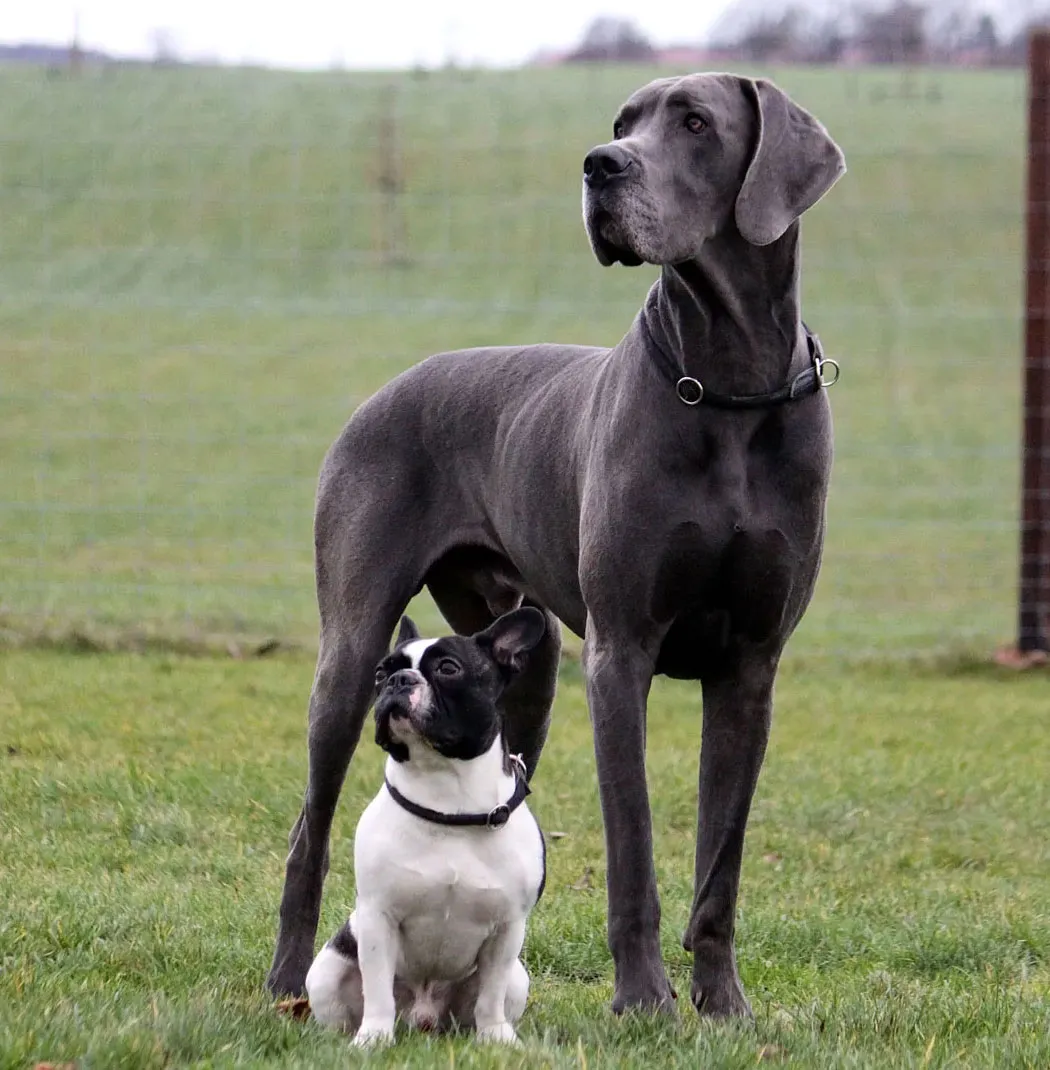
Standing as tall as 32 inches at the shoulder, Great Danes tower over most other dog breeds. When standing on their hind legs, they can be taller than most people. These powerful giants exhibit elegance and balance, moving with a smooth and effortless stride. Their coat comes in various colors and patterns, with the most famous being the black-and-white patchwork pattern known as "Harlequin." Life Expectancy: 8 – 10 years Origin: Germany Height: Female: 71 – 81 cm, Male: 76 – 86 cm Weight: Female: 45 – 59 kg, Male: 54 – 90 kg Temperament: Devoted, Friendly, Reserved, Gentle, Confident, Loving Colors: Black, Blue, Brindle, Fawn, Harlequin, Mantle The Great Dane is a breed of domestic dog known for its large size and gentle nature. Here is some important information about Great Danes: Appearance Great Danes are one of the largest dog breeds. They have a muscular build and a well-proportioned body. Their heads are large and square-shaped, with long snouts and deep-set eyes. They have short coats that come in various colors, including fawn, brindle, black, blue, mantle, and harlequin. Size Great Danes are considered a giant breed. On average: Males: 30-34 inches (76-86 cm) at the withers, weighing 140-175 pounds (64-79 kg). Females: 28-32 inches (71-81 cm) at the withers, weighing 110-140 pounds (50-64 kg). Temperament Despite their large size, Great Danes are known for their friendly and gentle nature. They are often referred to as "gentle giants." They are usually great with children and form strong bonds with their family members. While generally friendly with strangers, they can be protective if they sense a threat. Exercise and Training Although Great Danes are not highly energetic, they still require regular exe
rcise to stay healthy. Daily walks and playtime are essential for their physical and mental well-being. Early socialization and obedience training are crucial to ensure they grow into well-behaved and well-adjusted dogs. Health Issues Like most large breeds, Great Danes are prone to certain health issues, including: Hip dysplasia Bloat (gastric torsion) Heart disease Certain types of cancer Regular veterinary checkups, a balanced diet, and proper exercise can help manage these risks. Lifespan The average lifespan of a Great Dane is typically between 7 and 10 years. However, with proper care, some Great Danes may live even longer. Socialization Well-socialized Great Danes are some of the most friendly and well-mannered dogs. They love to play and enjoy spending time with their families. Early socialization, such as puppy training classes, exposure to different people, and visits to new environments, helps them grow into confident and well-rounded dogs. Owning a Great Dane requires commitment and responsibility. They need enough space, a balanced diet, regular exercise, and proper veterinary care. If you’re considering getting a Great Dane, research thoroughly and understand their specific needs before bringing one home.